



Mobile reverse osmosis for drinking water treatment post-fire
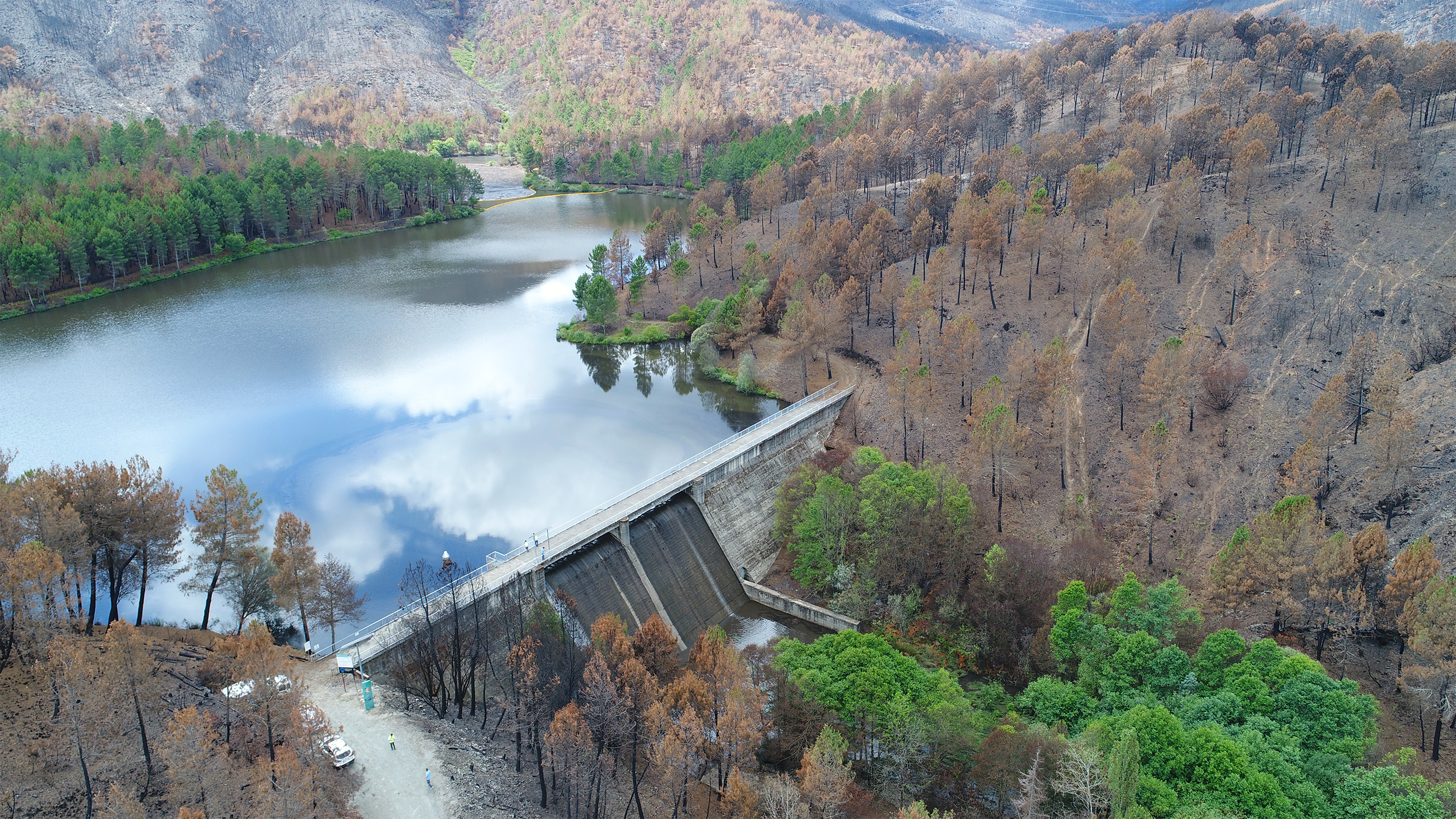
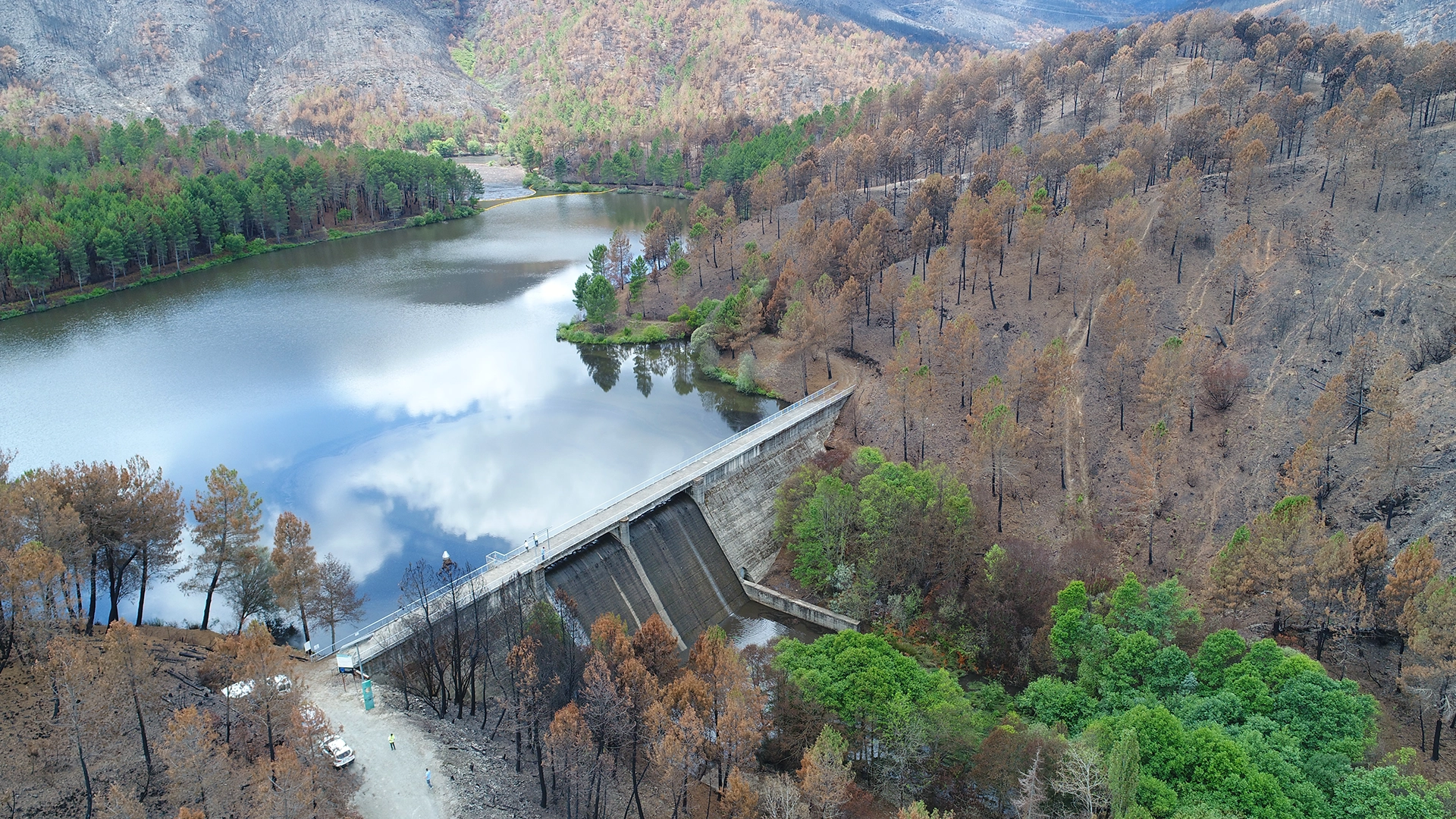
After the Pinofranqueado fire, the impounded water was affected by ash, mud, organic matter, soluble salts, and organic compounds. recalcitrant. The existing WTP, based on coagulation and filtration chambers, was adapted through aeration, PAC, and pH control.
Without aeration, the PAC did not coagulate properly. With the introduction of air, coagulation was activated and filterable flocs were formed. Subsequently, the existing filter removed the generated clots, but the water remained yellow and unsuitable for conventional drinking water treatment.
This demonstrated that the problem was not solely turbidity, but also dissolved organic matter, true colour, ash salts, and recalcitrant contaminants that passed through conventional filtration.

The Problem:
The chemical nature of post-fire water
The water presented a complex matrix, with contaminants in particulate, colloidal, and dissolved phases.
| Fraction | Main contaminants | Problem |
| Particulate | Ashes, sludges, solids | Turbidity and siltation |
| Colloidal | Humic, fine, metals | Difficult coagulation |
| Dissolved | Tannins, fulvics, salts, recalcitrant organics | Yellow colour and non-potability |
The main pollutants were:
- Alkaline ashes, which increase pH, alkalinity, and conductivity.
- Tannins and humic/fulvic acids, responsible for the yellow/brown colour.
- Dissolved organic matter and recalcitrant compounds, which increase TOC/COD.
- Possible Fe/Mn reduced by anoxic reservoir conditions.
- Sale of leachates from ash.
The problem
The chemical nature of post-fire water
The water presented a complex matrix, with contaminants in particulate, colloidal, and dissolved phases.
| Fraction | Main contaminants | Problem |
| Particulate | Ashes, sludges, solids | Turbidity and siltation |
| Colloidal | Humic, fine, metals | Difficult coagulation |
| Dissolved | Tannins, fulvics, salts, recalcitrant organics | Yellow colour and non-potability |
The main pollutants were:
- Alkaline ashes, which increase pH, alkalinity, and conductivity.
- Tannins and humic/fulvic acids, responsible for the yellow/brown colour.
- Dissolved organic matter and recalcitrant compounds, which increase TOC/COD.
- Possible Fe/Mn reduced by anoxic reservoir conditions.
- Sale of leachates from ash.

Technical Conclusion
The Pinofranqueado case demonstrates that, following a forest fire, a conventional WTP can be overwhelmed when the water contains alkaline ashes, tannins, humic/fulvic acids, salts, dissolved organic matter, and recalcitrant pollutants.
Aeration was necessary for the PAC to coagulate correctly, indicating a low redox matrix, reduced species, and complexing organic compounds. Filtration removed solids and flocs, but the water remained yellow because a dissolved fraction, not removable by conventional filtration, persisted.
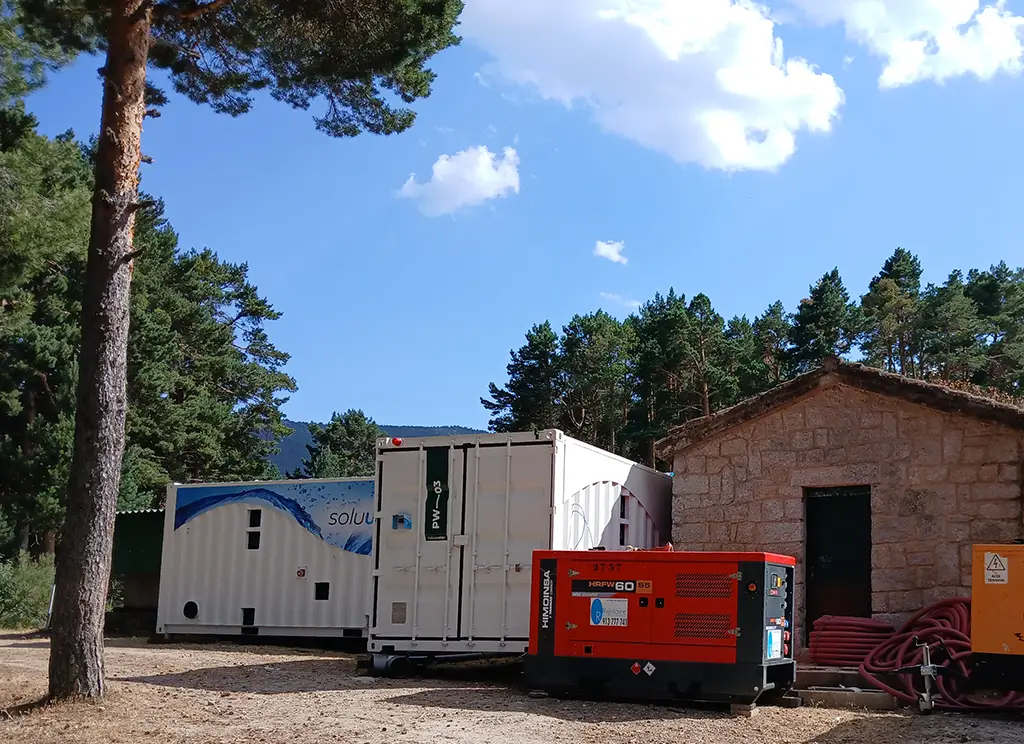
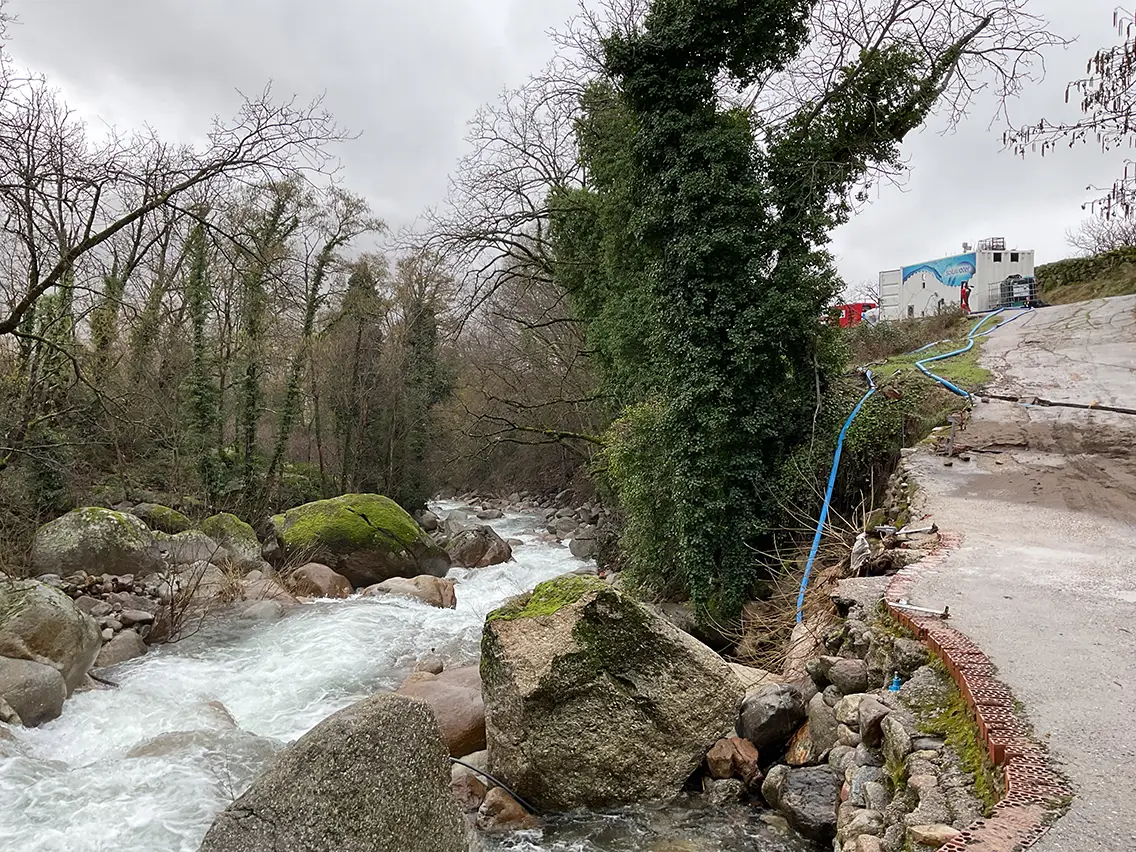
The incorporation of SOLUWATER RO_BW, based on mobile reverse osmosis, was the decisive stage in completing the potable water treatment, eliminating the dissolved fraction and turning the operation into a success story for water affected by forest fires.


 English (UK)
  Español
  Português
  Deutsch
  Français
  Svenska
  Italiano