
The Cause:
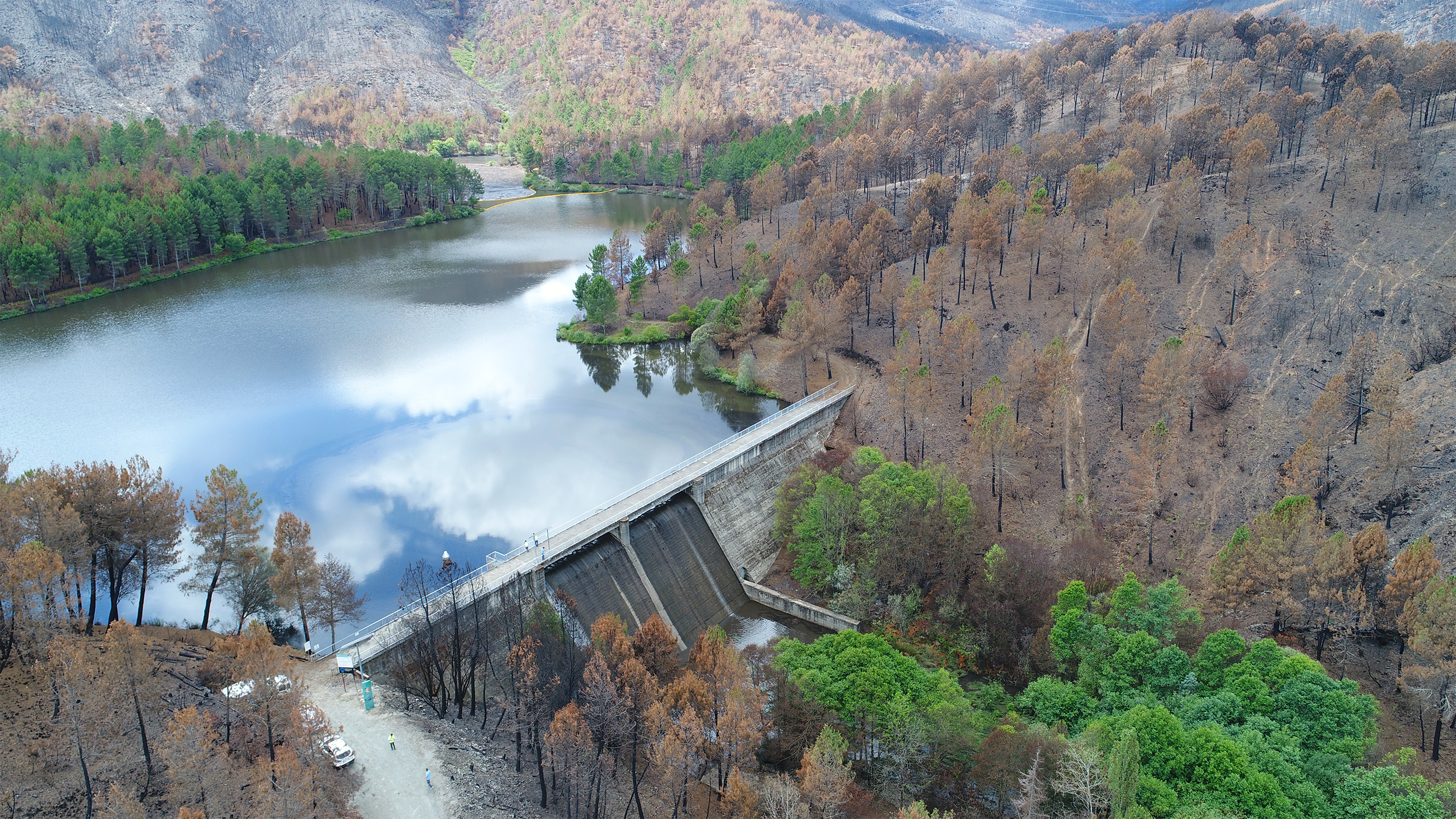
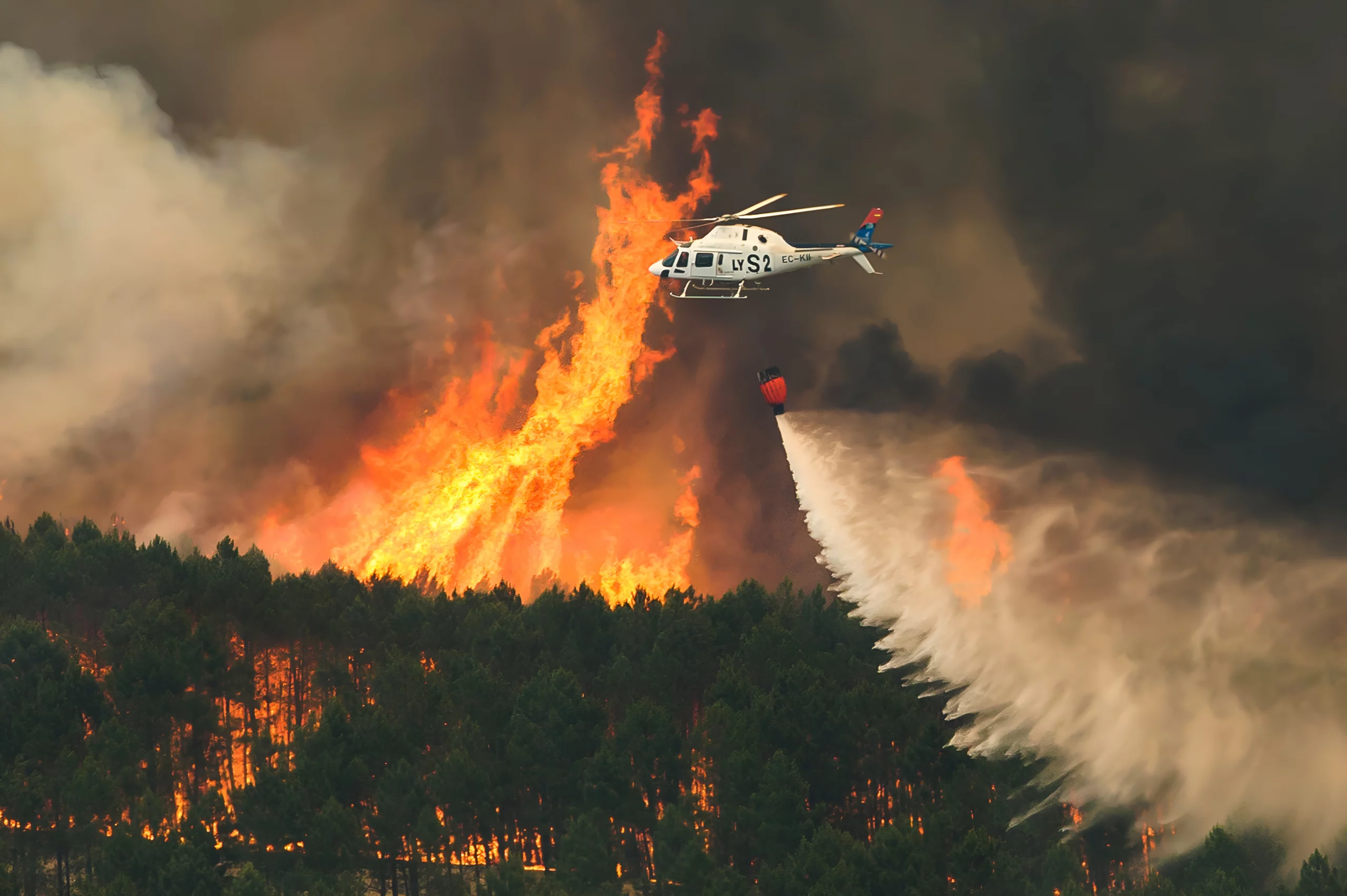
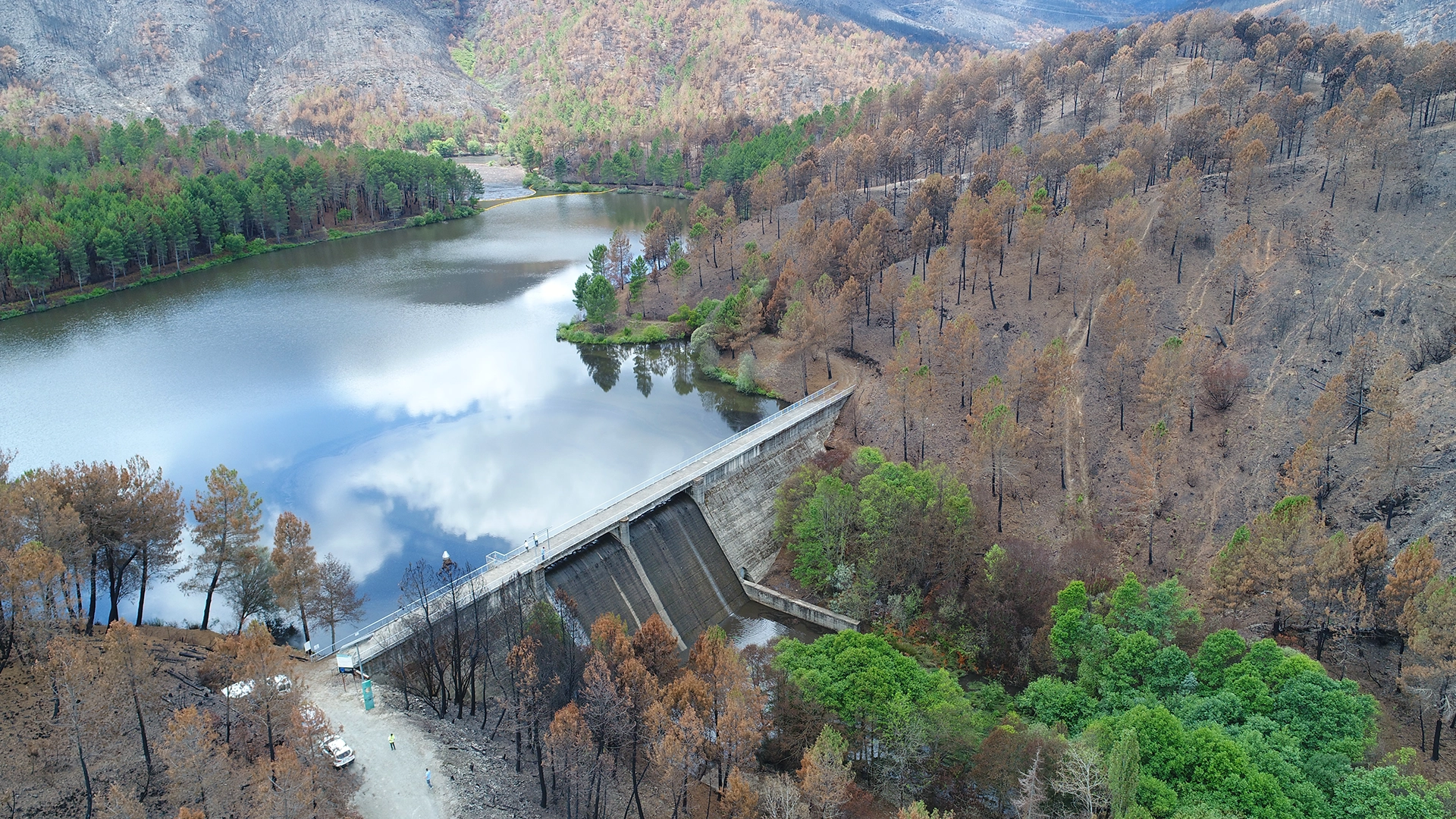
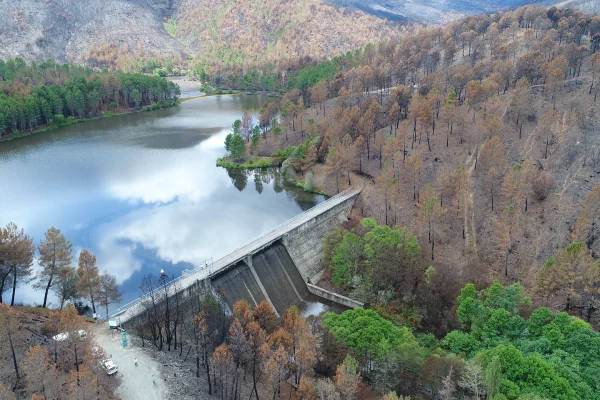
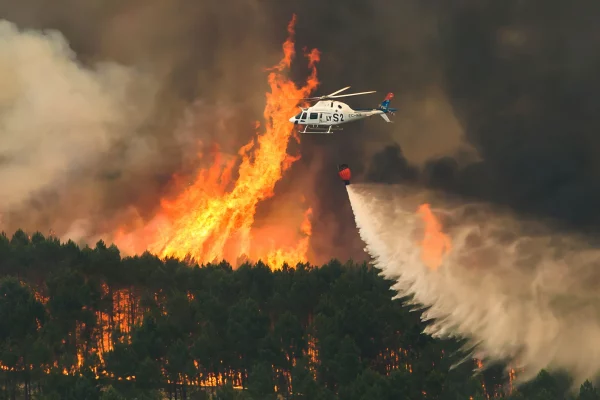
The fire in Pinofranqueado
After the Pinofranqueado fire, the impounded water was affected by ash, mud, organic matter, soluble salts, and organic compounds. recalcitrant. The existing WTP, based on coagulation and filtration chambers, was adapted through aeration, PAC, and pH control.
Without aeration, the PAC did not coagulate properly. With the introduction of air, coagulation was activated and filterable flocs were formed. Subsequently, the existing filter removed the generated clots, but the water remained yellow and unsuitable for conventional drinking water treatment.
This demonstrated that the problem was not solely turbidity, but also dissolved organic matter, true colour, ash salts, and recalcitrant contaminants that passed through conventional filtration.
The Problem:
The chemical nature of post-fire water
The water presented a complex matrix, with contaminants in particulate, colloidal, and dissolved phases.
| Fraction | Main contaminants | Problem |
| Particulate | Ashes, sludges, solids | Turbidity and siltation |
| Colloidal | Humic, fine, metals | Difficult coagulation |
| Dissolved | Tannins, fulvics, salts, recalcitrant organics | Yellow colour and non-potability |
The main pollutants were:
- Alkaline ashes, which increase pH, alkalinity, and conductivity.
- Tannins and humic/fulvic acids, responsible for the yellow/brown colour.
- Dissolved organic matter and recalcitrant compounds, which increase TOC/COD.
- Possible Fe/Mn reduced by anoxic reservoir conditions.
- Sale of leachates from ash.
The coagulation chamber and existing filters removed:
- clots;
- coagulated ashes;
- solids;
- Turbidity;
- part of the particulate organic matter.
But they weren't clearing enough:
- true colour;
- soluble tannins;
- fulvic acids;
- dissolved sales;
- conductivity;
- complexed metals;
- organic matter of low molecular weight;
- Persistent organic pollutants.
Aeration was key because it raised dissolved oxygen and redox potential, favouring the oxidation of reduced species and floc formation with PAC.
Fe²⁺ + O₂ → Fe³⁺ → Fe(OH)₃ ↓
pH control allowed the PAC to form effective aluminium hydroxides:
Al³⁺ → Al(OH)₃ ↓
Even so, the filtered water remained yellow, indicating that conventional treatment was not sufficient as the final stage in drinking water treatment.



The Solution:
Hiring a mobile water treatment plant
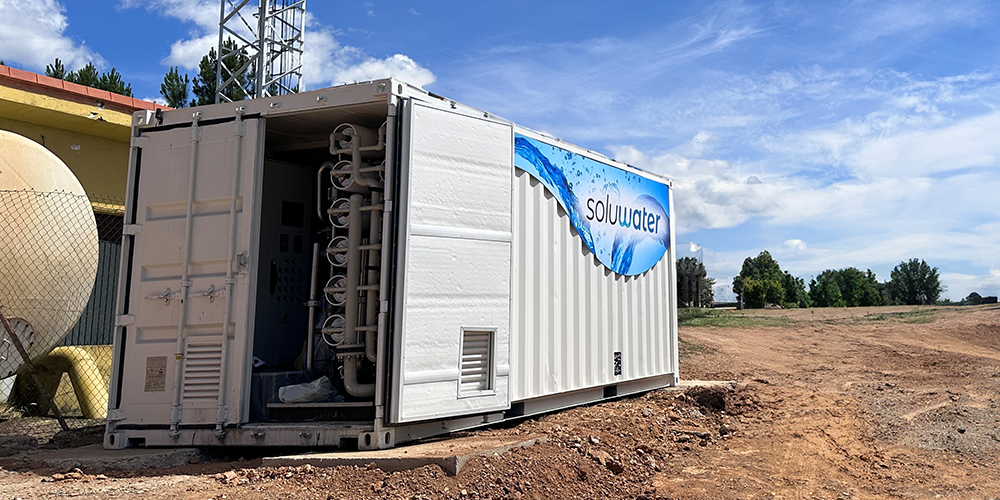
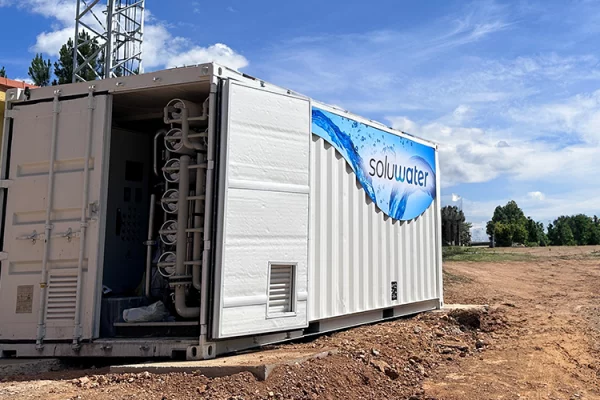
On SOLUWATER RO_BW it was installed as a mobile reverse osmosis plant to complete the treatment.
Reverse osmosis acted as a molecular and ionic separation barrier, removing the dissolved fraction that could not be retained by coagulation and filtration.
| Residual problem | Solution via reverse osmosis |
| Yellow | Tannin and humic retention |
| Ash salts | Conductivity reduction |
| Dissolved organic matter | Reduction in TOC/COD |
| Recalcitrant compounds | Membrane separation |
| Soluble metals | Reverse osmosis retention |
| High alkalinity | Reduction of dissolved salts |
The existing ETAP acted as pre-treatment, while SOLUWATER RO_BW enabled the finalisation of potable water treatment with stable quality.
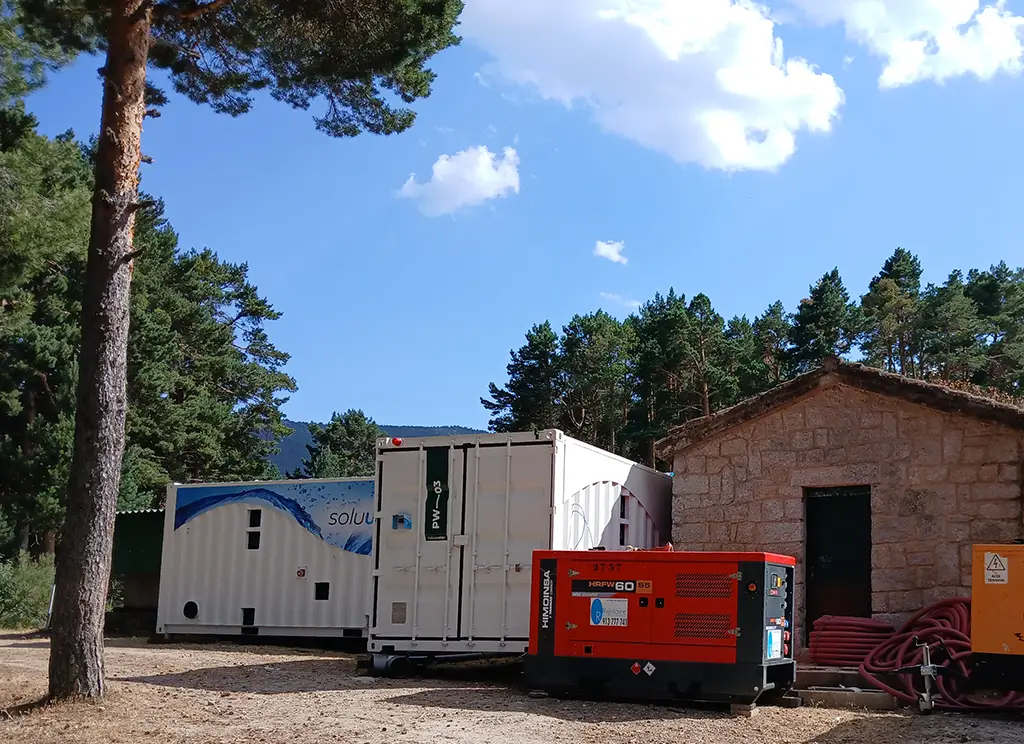
The temporary implementation of the SOLUWATER PW containerised plant returned stability to the system of Drinking water supply In a post-fire scenario. Following the summer 2026 fire in the Sierra de Gredos, the Jerte basin received very violent flows even with moderate rainfall, with sharp level increases and one Extreme ash and solids load which seriously compromised water quality. In that context, PW technology made it possible to activate a Emergency water purification solution directly from the river, with continuous operation and health and safety criteria.
On SOLUWATER PW it proved its reliability thanks to a multi-stage treatment designed for harsh waters: Initial separation of sands by hydrocyclone, Parallel bilayer filtration with frequent washes and Final disinfection with UV radiation and chlorine dosing. This setup made it possible to maintain service continuity under critical conditions, and as it was an implementation with direct network injection, was not viable to incorporate ozone dosage in this specific case.

Technical Conclusion
The Pinofranqueado case demonstrates that, following a forest fire, a conventional WTP can be overwhelmed when the water contains alkaline ashes, tannins, humic/fulvic acids, salts, dissolved organic matter, and recalcitrant pollutants.
Aeration was necessary for the PAC to coagulate correctly, indicating a low redox matrix, reduced species, and complexing organic compounds. Filtration removed solids and flocs, but the water remained yellow because a dissolved fraction, not removable by conventional filtration, persisted.
The incorporation of SOLUWATER RO_BW, based on mobile reverse osmosis, was the decisive stage in completing the potable water treatment, eliminating the dissolved fraction and turning the operation into a success story for water affected by forest fires.
Preguntas frecuentes
Persistent in water treatment
In water treatment, recalcitrant refers to compounds or contaminants that are difficult to remove using conventional processes such as coagulation, settling, or filtration. They tend to remain dissolved in the water and can affect its colour, conductivity, organic matter, and potability.
What are recalcitrant pollutants?
Recalcitrant pollutants are persistent substances that are not easily removed by conventional treatments. In fire-affected waters, these can include dissolved organic matter, tannins, humic acids, fulvic acids, soluble salts, and complex organic compounds.
Why do recalcitrants appear in waters affected by forest fires?
Following a forest fire, water can carry ashes, mud, salts, burnt organic matter, tannins, and complex organic compounds. Some of these contaminants remain dissolved and behave as a recalcitrant fraction, difficult to retain by conventional filtration.
Conventional filtration does not remove all recalcitrant substances for a number of reasons. Recalcitrant substances are defined as those that resist degradation by conventional biological and physical treatment processes.
Conventional filtration primarily removes solids, turbidity, and coagulated particles. However, many recalcitrant substances remain dissolved in the water, thus passing through the filters and potentially causing ongoing issues with colour, conductivity, organic matter, and the final water quality.
Reverse osmosis removes recalcitrant compounds from water.
Yes. Reverse osmosis acts as a molecular and ionic separation barrier capable of reducing dissolved salts, organic matter, soluble metals, colour, and recalcitrant compounds that have not been removed by coagulation or filtration.
What is the difference between turbidity and recalcitrant pollutants?
Turbidity is related to visible or measurable suspended particles in water. Recalcitrant pollutants, on the other hand, may be dissolved and do not always increase turbidity, although they can cause colour, odour, organic load, high conductivity, or potability issues.
What treatments are used for recalcitrant substances in drinking water?
The treatment can combine aeration, pH adjustment, coagulation, filtration, and an advanced stage such as reverse osmosis. In complex water, mobile reverse osmosis acts as a final barrier to separate difficult-to-remove dissolved contaminants.
What problems do scale formers cause in water?
Recalcitrant substances can cause persistent colour, increased organic matter, the presence of compounds that are difficult to degrade, increased conductivity, an unusual taste or smell, and difficulty in achieving adequate drinking water treatment parameters.



 English (UK)
  Español
  Português
  Deutsch
  Français
  Svenska
  Italiano